
Dedicated
Search & Rescue Operations (SAR)
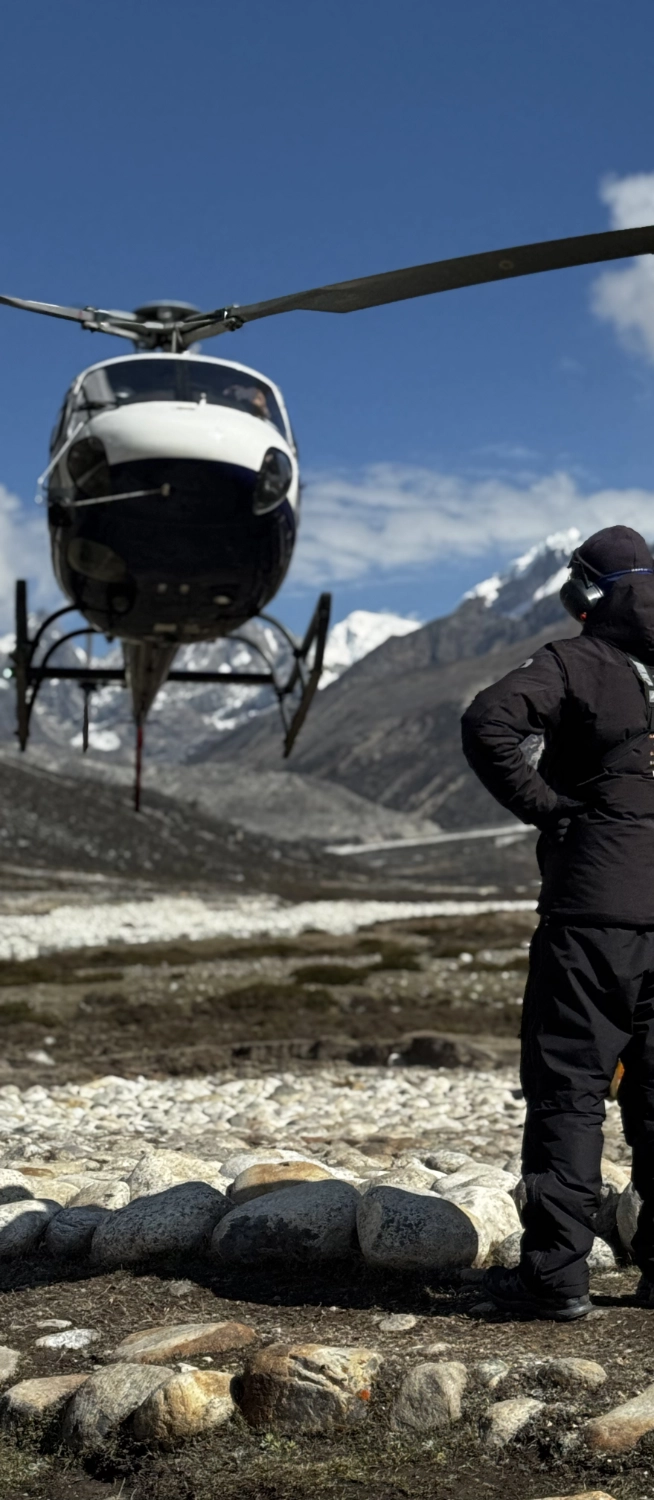
When individuals go missing in the vast and unforgiving terrains of the Himalayas, Basecamp Helicopter provides immediate, systematic aerial search operations. Operating with elite high-altitude pilots and trained aerial spotters, we specialize in locating and extracting stranded mountaineers, lost trekkers, and avalanche victims across Nepal’s most remote regions.
Time is the most critical factor in a missing person scenario. Our team is on standby to coordinate with expedition leaders, local authorities, and ground rescue teams to execute precise aerial sweeps, locate the subject, and bring them safely home.
-
Systematic Aerial Sweeps
-
High-Altitude Extraction
-
Rapid Emergency Deployment
How Our Search & Rescue Process Works
Finding a missing person in mountainous terrain requires more than just flying; it requires methodical planning and flawless execution. Here is how we manage complex SAR missions.
01
Emergency Briefing & Grid Planning
The moment a distress call is verified, our flight operations team immediately consults with ground contacts, expedition agencies, or authorities to gather the subject’s last known location. We then map out systematic aerial search grids (such as expanding squares or contour tracking) based on terrain, weather, and probable routes.
02
Rapid Deployment & Aerial Sweeps
Once airborne, our pilots and trained spotters execute the planned search patterns. Flying at optimal altitudes and speeds for visual scanning, the crew systematically combs ridges, valleys, and crevasses, utilizing deep knowledge of Himalayan topography to anticipate where a lost individual might seek shelter.
03
Location & Tactical Assessment
Upon spotting the missing individual(s), the pilot immediately assesses the surrounding terrain. If the area is too steep or unstable for a standard landing, we evaluate options for a hover-extraction or coordinate the drop-off of specialized high-altitude rescue technicians (Sherpas or mountain guides) to secure the patient.
04
Extraction & Medical Evacuation
Once the individual is safely onboard, the mission transitions to a medical evacuation. We fly directly to Kathmandu or the nearest advanced medical facility, relaying the patient’s condition to waiting ambulances and medical staff to ensure seamless emergency care upon landing.
What We Need to Launch a Search Mission
To maximize the chances of a successful rescue and dispatch our aircraft immediately, we require the following critical details from the reporting party:
Last Known Position (LKP)
The exact GPS coordinates, last known village, teahouse, or specific mountain pass where the individual was last seen or made contact.
Timeline & Itinerary
The date and time of last contact, and the planned trekking or climbing route.
Subject Profile
Number of missing persons, their physical condition, and critically, the colors of their outer clothing, backpacks, and tents (this is vital for aerial spotters)
Weather Update
Current visibility, cloud cover, and wind conditions at the last known location.
Ground Coordination
A direct contact number (satellite phone preferred) for the expedition leader or local authority coordinating the search on the ground.
Financial Guarantee
Confirmation of SAR-inclusive insurance coverage or an upfront payment guarantee to immediately authorize the flight.